How to get your teen to open up (and actually talk)
Why the dinner table interrogation never works, and what to do instead.
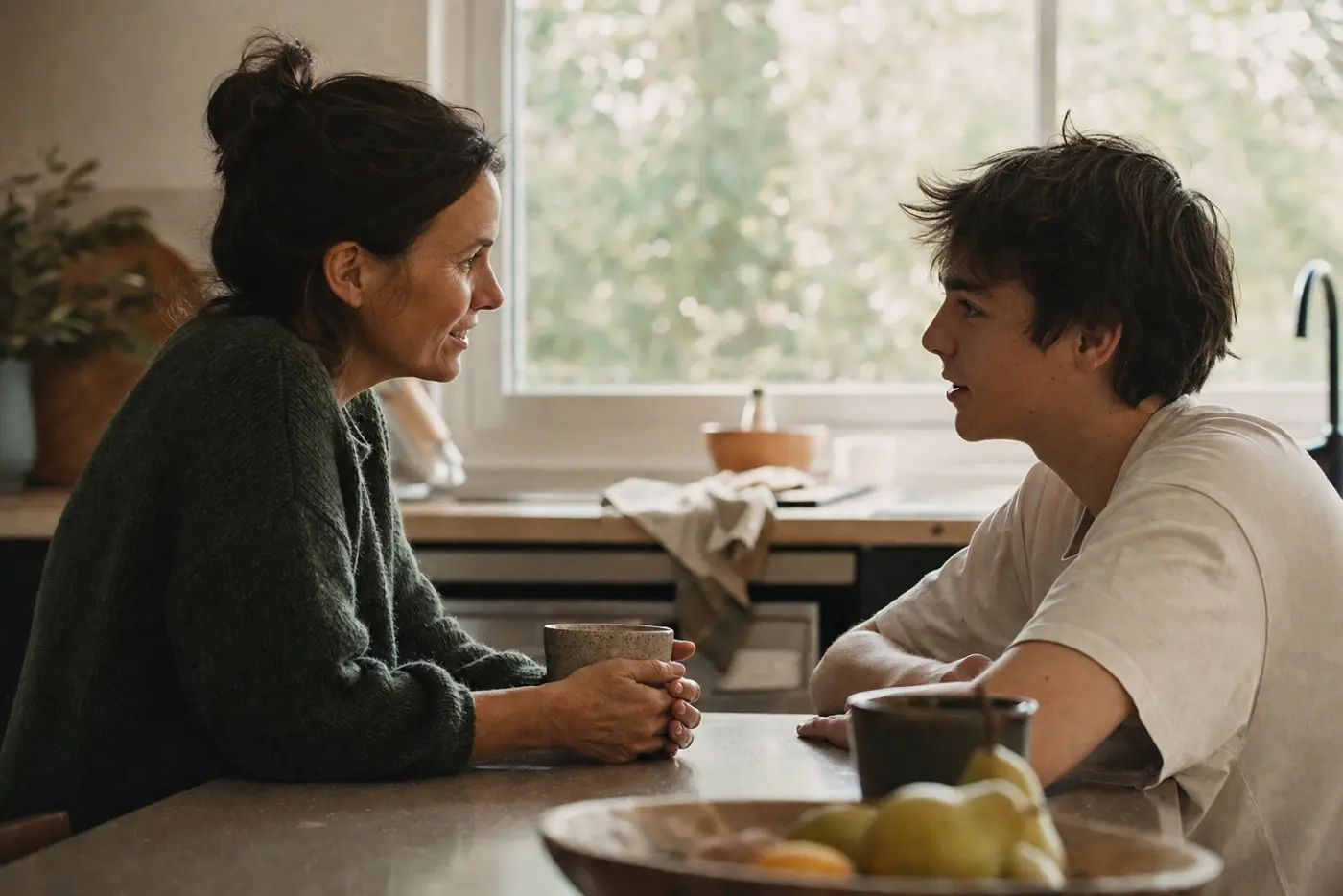
"How was your day?" "Fine." "Anything happen?" "Not really." Most parents know this exchange word for word. It isn't that your teenager has nothing to say. It's that being sat down and asked to report on themselves, face to face, is one of the least comfortable ways for a young person to talk.
In my work with teenagers and their families, the parents who get real conversations aren't the ones who ask the best questions. They're the ones who've changed the conditions around the conversation. Here's what that looks like.
Why the dinner table interrogation doesn't work
Direct eye contact and a straight question can feel like an interview, especially about anything that matters. Most teenagers close down under that kind of pressure, not because they're hiding something, but because it simply isn't a comfortable way to talk.
Talk beside them, not across from them
A car trip, a walk, doing the dishes together: side by side, doing something else, with no obligation to hold eye contact. Conversation tends to open up in these moments precisely because it doesn't feel like a conversation is the point.
Ask about specifics, not generalities
"How was your day" asks a teenager to summarise eight hours in one word. "What was the best and worst bit of today" gives them somewhere to start. Specific questions are easier to answer than broad ones, for anyone.
Let silence do some of the work
When a teenager doesn't answer straight away, resist filling the gap. Give them a few extra seconds. Often what comes after the silence is more honest than what would have come out under immediate pressure.
When they do open up, don't lecture
The fastest way to make a teenager regret telling you something is to respond with a lecture or a fix. If you want them to keep talking, the first job is to listen, not to solve. The advice can come later, if it's wanted at all.
None of this is complicated, but it does take patience, because the pay off isn't usually immediate. A teenager who feels safe telling you the small things is more likely to tell you the big ones, later, when it matters most.
If you'd like more of this kind of thing in your inbox, you can get Dan's weekly article.